
Quality Systems Enhancement · founded 1992
Founder-led guidance. Client-owned systems.
QSE is a Roswell, Georgia management-system consulting, training, and auditing company founded by Baskar Kotte. The work is organized around practical interpretation, visible responsibility, usable evidence, and durable client capability.
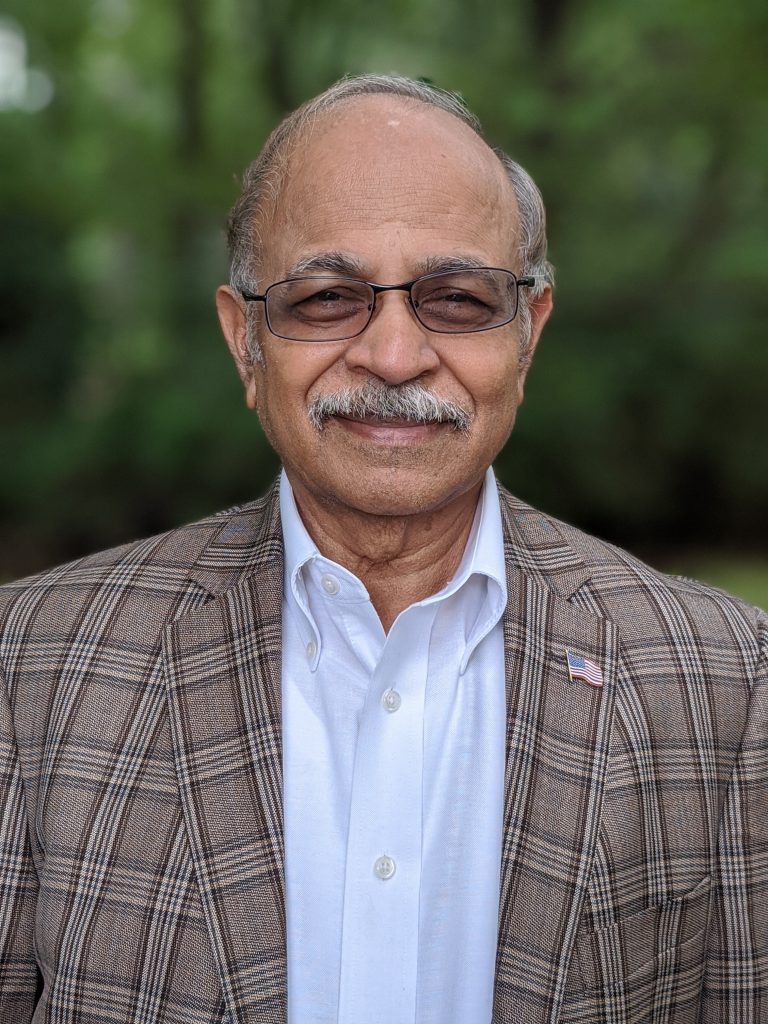
Founder and president
Baskar Kotte
President · Principal Consultant
QSE’s published profile identifies Baskar as the company’s founder and president and describes his work across management-system consulting, training, auditing, manufacturing, and operational improvement.
His published biography records participation in United States Technical Advisory Groups connected with quality, environmental, and energy management standards, along with work on guidance concerning management-system consultants and customer satisfaction.
QSE team
Management-system work is delivered by a broader consultant roster.
Explore the published team and the profile structure used to govern roles, qualifications, standards experience, industries, and availability.
Meet the QSE team →Working belief
A management system is operating infrastructure.
It should help leaders see performance, process owners understand responsibility, teams preserve useful evidence, and internal auditors examine whether the system works as intended.
The durable outcome is an organization that can understand, operate, examine, and improve its own system.
Operating principles
What clients should experience in the work.
Context before templates
The applicable requirement, organizational role, operating reality, and intended outcome shape the work.
Clarity before volume
Processes, responsibilities, evidence, and decisions should be understandable to the people who use them.
Capability before dependence
Consulting and training should leave the client better able to operate, examine, and improve its own system.
Evidence before claims
Advice, audit conclusions, and public statements should remain traceable to appropriate evidence and review.
What QSE holds to
The commitments behind the work.
Simplicity
One-level documentation, typically under 200 pages, written for the people who use it — not a binder that sits on a shelf.
Partnership
We work with you, not over your shoulder. One named consultant stays with you from kickoff to certificate.
Proof
Evidence over adjectives. Every claim we make is backed by a certification, an audit result, or a client who will take your call.
Ownership
Knowledge transfer is the deliverable. We train your team to run the system, then step back — the goal is that you no longer need us.
History
How QSE got here.
- 1987
Writing the standard, not just following it
Our founder, Baskar Kotte, was a member of the core group involved in writing ISO 9001 — the first edition of the standard most of the manufacturing world now certifies to. He has since served on the U.S. Technical Advisory Groups for ISO/TC 176, TC 207 and TC 242, and contributed as a U.S. delegate to several international standards.
- 1992
QSE opens in Roswell, Georgia
Baskar founded Quality Systems Enhancement five years after helping write ISO 9001, on a conviction formed inside the committee room: the standard is reasonable, and it is the paperwork built around it that defeats people. Simplification has been the method ever since.
- A first
The first firm to certify packaging
QSE took packaging certification on when no one else was doing it. That early work is why the practice still runs deep in corrugated, flexible and food-contact packaging — GFSI packaging schemes, ISO 15378, NSF/ANSI 2 and GMI among them.
- 1996–97
Environmental management joins the work
ISO 14001 arrived and QSE added environmental management alongside quality, integrating the two rather than running them as separate systems — the same argument as the documentation one, made about whole systems instead of pages.
- Sector by sector
The disciplines the standards created
As industries wrote their own requirements on top of ISO 9001, QSE followed them into each: automotive through QS-9000 and ISO/TS 16949 to today's IATF 16949; aerospace across AS9100 for manufacturers, AS9110 for repair stations and AS9120 for distributors; medical devices under ISO 13485; food safety through ISO 22000 and the GFSI-recognized schemes; telecommunications under TL 9000; and information security under ISO 27001.
- 2018
Occupational health and safety
Safety management became the fourth pillar with ISO 45001, replacing OHSAS 18001 and completing the set most clients now integrate: quality, environment, energy and safety in one system rather than four.
- Today
900+ organizations, still by referral
Consultants across the US, Canada, Mexico and India, more than 900 organizations certified, and a 100% first-time pass rate — grown almost entirely on clients telling the next company to call us.
Begin with context
Talk directly about the work ahead.
Share the requirement if known, current condition, intended outcome, and the people who must own the system afterward.